Showing posts with label Bernard Parks. Show all posts

Friday, October 28, 2011

Bruce Dixon on Atlanta - Template for L.A. Critique?


Editor's Note: Bruce A. Dixon is a distinguished journalist living in Marietta GA, where he is a principal at a strategic telephony and consulting firm, and a state committee member of the Georgia Green Party. He wrote this after Atlanta's African-American Mayor Kasim Reed ordered a violent crackdown on Occupy Atlanta. I have cross-posted the entire commentary because, in my opinion, this is a beautiful example of the critique I would like to see published about California's own "Black Misleadership Class." Where I live in Los Angeles, the 3 city council members most hostile to Occupy LA are the 3 African-Americans: Herb Wesson, my Councilman Bernard C. Parks, and mayoral candidate Jan Perry. Moreover, the overwhelming majority of L.A.'s race-obsessed presumed to be "progressive" intelligentsia has either been indifferent, lukewarm, or hostile to Occupy LA. Too many progressives cling to sentimental feelings about Democratic Party Hacks in communities of color -- bamboozled by 40-year-old myths that simply "Being Black" confers a special high-minded moral sensitivity for "the poorest of the poor" and "the most vulnerable" ... blah, blah, blah.

Do you think this is too harsh? Post a comment. I am sorry to report that we have no consensus among L.A. Greens about our relationship with Occupy LA and the "Black Misleadership Class." Nevertheless, I am determined to write a statement on this and I need your input.

Posted on The Black Commentator, October 26, 2011
Occupy Atlanta VS Kasim Reed,
the Black Misleadership Class and the One Percent

By Bruce A. Dixon


Back in January 2010, I wrote that

"...the black political elite no longer believes its mission is to fight for peace and justice. The newer, more cynical black elite are unmoored from their peace-and-justice-loving base. They are focused on their own careers, and the corporate largesse that makes those careers possible... the black politics of a previous generation, in which black candidates and public officials were expected to stand for something beside their own careers, is over..."

I pointed to Atlanta mayor Kasim Reed as poster boy for this new and cynical generation of the black misleadership class.

On Saturday afternoon, Atlanta mayor Kasim Reed screamed, shouted and threatened representatives of Occupy Atlanta, declaring that those who wanted to be arrested "would get their wish." After a mobilization of several hundred additional protesters, some barricades and a threatening display of police numbers, City Hall decided not to clear Woodruff Park that night. The mayor declared he would send a delegation of preachers to talk to occupiers, but that this would be their "last chance."
By Monday, the mayor regained his composure, and called an afternoon press conference in which he declared that Occupy Atlanta was an imminent danger to public health and safety, because of a single gas-fueled electric generator. In the park. Never mind, Occupy Atlanta's Tim Franzen pointed out, that Atlanta tailgaters at college and NFL football games deploy dozens of these in parking lots every weekend.

Atlanta police massed around the occupiers again Sunday and Monday nights, amid renewed mayoral threats, but took no further action. TV viewers were treated to the spectacle of former mayor Andrew Young advising occupiers to settle on one or two good demands and leave the park. When a couple of the mayor's preachers, who claimed they were not acting on behalf of the mayor finally showed up on Tuesday, they demanded an immediate meeting with five to seven leaders of the occupation, and one or two demands they could take back to City Hall. Spokespeople for the occupiers, who included State Senator Vincent Fort, Ron Allen, Tim Franzen, Joe Beasley and a handful of others told them the earliest meeting date that could be arranged would be Thursday, and expressed serious doubt that the mayor was able or willing to address their demands. The Thursday meeting was agreed upon, and the preachers departed.

But late Tuesday night, in a display of contempt for the occupiers and his own preachers, Mayor Kasim Reed ordered Woodruff Park surrounded by hundreds of police, who cleared the park shortly after midnight, arresting more than 50.

Atlanta's Black Mayors, The Black Misleadership Class and the One Percent

Nobody should doubt that Atlanta mayor Kasim Reed is firmly in the pocket of the one percent. It's old news. It's a choice he and leaders of the local black misleadership class made more than a generation ago. The clique of black political leaders who came to power with Atlanta mayor Maynard Jackson in 1973, and who still hold sway today have never been friends or advocates of black or white working people. Though they owed, and still owe their offices, careers and personal fortunes to the political victories won by the Freedom Movement, Atlanta's black misleadership class has rarely if ever lined up with black and working people when it came to economic justice.

Mayor Maynard Jackson in 1977 defined the relationship between the class of newly privileged black politicians and the rest of black Atlanta by deliberately provoking and then savagely breaking a strike by Atlanta sanitation workers seeking decent pay and medical benefits. Georgia's white business leaders began to understand that though the color of the city's politicians had changed, little else would. And it hasn't. By the end of the 70s, the Maynard Jackson administration boasted of leaveraging city contracts and the construction of the nation's largest airport to create two or three dozen new black millionaires, from whom wealth was to trickle down to the entire African American community. The only thing that really trickled down to black Atlanta and black communities nationwide was the self-celebrating myth of Black Mecca, where the climate was benign, the housing affordable, the jobs plentiful and the politicians enlightened. It was a myth, but a potent one.

Maynard Jackson was succeeded by Andy Young, a former confidante of Martin Luther King. Young's signature project was bringing the 1996 Olympics to Atlanta, providing the excuse to clear vast tracts in the city of poor people and abandoned industries, and replace them with richer people and more shopping. Jackson returned for a last term after Young, and was followed by Bill Campbell, who sold the city's water network to a private firm. Young cashed in his chips as a civil rights icon to found GoodWorks International, a PR and consulting firm for multinational corporations like Wal-Mart and Nike, and serve on the boards of corporations like Barrick Gold, which is heavily implicated in plunder and genocide in the Congo.

Shirley Franklin came in after Campbell with a campaign of sweeping privatizations of parks, city services, parking and more. But with Atlanta's newly privatized water works pumping rust colored mud through the taps of tens of thousands of Atlanta residents (including wealthy white ones) the drive to privatize everything in sight had to be slowed, though Franklin was able to complete demolition of nearly all Atlanta's public housing, driving tens of thousands of poor black Atlantans from the city. Like Andy Young, Franklin also cashed in after leaving Atlanta's City Hall, as a consultant for the telecom industry, and championing the privatization of schools and services of all kinds.

By 2002, after a generation of “Black Mecca” and black political leadership, the city's poverty rate was in the top five of metro areas nationwide. One in three black Atlanta children is in poverty, even with the expulsion of tens of thousands of poor Atlantans as their neighborhoods have been demolished.

The current mayor is firmly within the tradition of his predecessors. Kasim Reed is a corporate lawyer for the rich and racist, a man who has never fought for or believed in justice for ordinary people. As a state senator in 2006 he introduced vicious anti-immigrant legislation that paralleled similar racist bills passed this year in Georgia and Alabama. As a mayoral candidate, Reed called himself “a civil rights lawyer,” leaving out the key detail that his practice represented the corporations that violated civil rights, not the black, brown, elderly or disabled plaintiffs whose rights had been violated. The day before being sworn in as mayor Reed promised local business leaders to deal with downtown “panhandlers” in what he called a “very muscular” fashion. The term “panhandlers” is shorthand for homeless black males, even though any sociologist or person who works with the homeless will tell you that only white homeless men can beg on the street. Unless they are very elderly or handicapped, black men are considered inherently too inherently “threatening” to be successful street beggars. The convention and tourist industry seems to want black men, especially homeless black men out of downtown Atlanta. Hence an obsession for Kasim Reed, and if his wealthy real estate backers is closing down the large homeless shelter at Peachtree & Pine, at the edge of downtown Atlanta only a mile from the site of Occupy Atlanta where hundreds of men, many of them gainfully employed, sleep every night.

Where the Occupy Movement in Atlanta May Be Going

About half the Atlanta occupation in Woodruff Park was composed of homeless mostly black men who had been in the park on a daily basis before the occupation. When the mostly white occupiers brought tents and food in, some the homeless got tents too, and were able to use the portable toilets. The homeless men were fed along with the occupiers, and took part in daily marches to banks, the scenes of police shootings and other activities. Though significant tensions existed within and among the occupiers, homeless and not, the two were beginning to learn how to work together.

Headquarters of the occupation, according to some of its leaders, may be moving to the Peachtree-Pine shelter complex at the edge of downtown. In contrast to cities where the mostly white occupations have utterly failed to connect with the ongoing struggles of local residents, Atlanta's occupiers are being driven into the arms of the homeless community. The next version of Occupy Atlanta will be even less to the liking of city officials and business leaders.

Why are police arresting thousands and dispersing “Occupy” gatherings in dozens of cities across the nation? Because they know that the occupy movement is a clear, present and persistent danger to established authority. People are emerging from their homes --- if they still have homes --- freeing themselves from TV and shopping, if they still have anything to shop with. They are coming out on corners in hundreds of cities and towns, most of them, for their first political activity beyond the narrow vote-and-go-home model sold to them by the two corporate parties.

Neither occupations nor occupiers are perfect. People are coming as they are, bringing the baggage of racism and classism and sexism, of divergent political views, of poverty, homelessness and despair. But they are coming. They are eager to connect with each other, to connect with whatever movement exists, or to help bring one into being that can challenge and change the world they live in. They are ready to learn and do real politics. What could possibly be more subversive, and more hopeful?


Read the Original Commentary at:
http://www.blackagendareport.com/content/occupy-atlanta-vs-kasim-reed-black-misleadership-class-and-one-percent

Saturday, September 06, 2008

Baldwin Hills Oil: 'Drill, Baby, Drill' -- Through the Heart of Obama Country


"Drill, baby, drill!" - was a popular cheer at the 2008 Republican National Convention. It's a parody of "Burn, baby, burn," the infamous cry during the 1965 Watts rebellion in Los Angeles. Ironically, it was former Maryland Lt. Gov. Michael Steele, one of the Republican Party's very few prominent black politicians, leading the cheer for the riot of the privileged:


"So, do you want to put your country first? Then let's reduce our dependency on foreign sources of oil and promote oil and gas production at home. In other words: Drill, baby, drill! And drill now!"


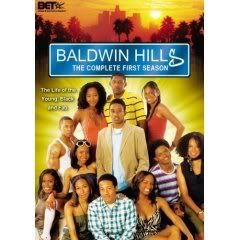
Baldwin Hills in Los Angeles, View Park, Windsor Hills, and Ladera Heights, are some of the most prominent middle-class African-American neighborhoods in the United States. Blacks are more than 70% of Baldwin Hills' population. After Blacks began moving there in the 1960s, it was nicknamed the "Golden Ghetto" and the "Black Beverly Hills." It has been home to celebrities like Ray Charles, Nancy Wilson, Tina Turner and the late Los Angeles Mayor, Tom Bradley. Black Entertainment Television (BET) used the setting for the "Baldwin Hills" television show.
The Fight Over the Baldwin Hills Oil Field
(Visit: www.baldwinhillsoil.org)


The two-square-mile Baldwin Hills Oil Field is the last large-scale undeveloped open space in South and West Los Angeles. The Oil Field has operated since 1924. Over time, it naturally becomes harder to extract oil for old wells until at some point they become unprofitable. In recent years the field had almost played out. As the oil companies have left, a large area has been designated the Kenneth Hahn State Recreation Area. For years, the old field and the surrounding nice residential neighborhoods coexisted. But this is the era when everything you ever thought you could rely on from American business - job security, health care, pensions, or even honest accounting - is old fashioned.

Plains Exploration and Production Company (PXP) based in (where else?) Houston, Texas wants to drill up to 1,000 new wells over the next 20 years. Next week there will be what is expected to be a contentious public hearing:

Los Angeles County Planning Commission
Wednesday, September 10, 2008
Hall of Administration,
Room 381B
500 West Temple Street
Los Angeles, CA 90012


PXP has been packing hearings with their employees while public comment has been severely limited. It time for the entire California Green Movement to get involved in this fight.


Environmental Impact Report

The Baldwin Hills area has included oil and gas production since the 1920s, when the area was largely underdeveloped. Today, the oil field operates in the middle of a densely-populated urban area. The Oil Field has operated since 1924 without community oversight or an Environmental Impact Report (EIR) to assess its impact on community health and safety.

In 2006, the Los Angeles County Board of Supervisors placed a temporary restriction on drilling new oil wells or deepening existing wells. That restriction expired on June 28, 2008 just as a Draft Environmental Impact Report (EIR) was released by the County. The oil field operator, Plains Exploration and Production Company (PXP), proposes to expand the drilling. The 60-day public comment period for the Draft EIR was set to expire on August 19. Representatives from community groups such as the Greater Baldwin Hills Alliance (GBHA), Mujeres de la Tierra , Culver Crest Neighborhood Association, and others have all petitioned for additional time to review the 800-plus pages of the Draft EIR.

Community Standards District

A Community Standards District (CSD) is a site specific zoning ordinance setting standards and regulations on oil drilling and production. It sets forth the conditions under which drilling can occur, while providing a mechanism to increase public oversight, monitoring, enforcement and accountability.

The Greater Baldwin Hills Alliance recommendations include:

  • Eliminate potential health risks and environmental impacts associated with the oil field operation through consolidation

  • Provide enforceable environmental and health protections including monitoring sanctions and penalties

  • Provide for the clean up and eventual transition of the land to parkland consistent with the Baldwin Hills Park Master Plan

  • Support residential living, open space, recreation, schools, critical habitats and improve the current aesthetics of the oil field

  • Establish oversight from a multi-sector advisory committee including residents.


More on Baldwin Hills and African-Americans in L.A.

From The City Project Web Site

Professor Josh Sides describes the unique role of the Baldwin Hills in the history of African Americans in Los Angeles and across the nation:


By the late 1950s and early 1960s, blacks had pushed west and south of West Adams into Leimert Park and the exclusive area of Baldwin Hills, which quickly became the heart of affluent black Los Angeles, a position it still holds today. A five-square-mile area of unincorporated hillside west of Leimert Park/ Crenshaw and south of West Adams, Baldwin Hills boasted large homes and expansive views. Largely undeveloped until the 1940s, hundreds of houses and apartment complexes were built there in the 1950s. As they had in Compton, blacks moved into new and large homes, with an average of four to six bedrooms per household. African Americans in Baldwin Hills were generally much better educated than their South Central counterparts, a fact that translated into greater job opportunities in the post-boom economy.

Accordingly, just over 71 percent of all employed African Americans in Baldwin Hills were white-collar workers. . .

In addition to superior housing, residents of Baldwin Hills and the nearby Leimert Park and Crenshaw areas also enjoyed many more conveniences as consumers. While many Watts and Willowbrook residents were forced to buy groceries at overpriced liquor stores, Baldwin Hills residents had other options. The Crenshaw Shopping Center, opened in 1947, as one of the first planned suburban malls in the United States, was the most popular shopping area for local residents. And, during the 1960s, the Baldwin Hills Center and the Ladera Center also opened, offering residents even greater selection and convenience. . .

Perhaps the greatest advantage to residing in Baldwin Hills was the superior quality of the area's public schools. In 1971, the Los Angeles Department of City Planning described Baldwin Hills public schools as the "the best schools of any city area inhabited primarily by black people" and on par with those in West Los Angeles and the San Fernando Valley." In addition to boasting low dropout rates and small class sizes relative to public schools in Watts and South Central, public schools in Baldwin Hills were also more racially integrated. . .


Environmental Hazards

There is a delicate balance between the interests of the oil company to harvest local oil wells and maintaining the environment for people living in surrounding communities.
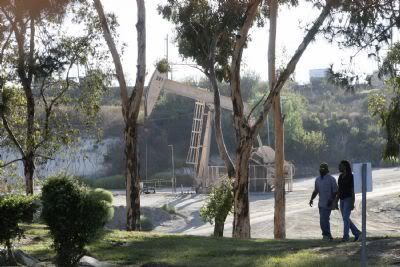
Baldwin Hills Oil Rig
A couple enjoys trail in a state park in the Baldwin Hills just a few steps away from a PXP oil pump. Photo from Los Angeles WAVE, September 4, 2008.

The by-products of oil production include: Benzene, Toluene, Ethylbenzene, and Xylene, collectively know as BTEX. Getting the crude oil from the ground in old wells requires water into the ground to force the crude oil to the surface. This creates an empty space or movement of a fault line. Also, extracting oil causes gases to rise to the surface through fault lines.

"Backyard bonanza or environmental time bomb?"
by Gregg Reese, Our Weekly, July 3 - July 6, 2008


Mark Salkin became involved in this issue as the president of the Culver City Crest Home Owners Association two and a half years ago, when the Plains Exploration & Production Company (PXP), which currently owns the Baldwin Hills extraction field, struck a methane deposit in the process of drilling for oil. The subsequent link made several residents sick (with out any fatalities), and the county became involved with allegations that PXP was not observing environmental safety guidelines.
Salkin told Our Weekly that he was given a personal tour of the oil facility by PXP Vice President Steve Rusch a few years ago, and observed numerous sites in production or in an exploratory mode. . .

derricks in the area are out in the open for all to see, with little or no cosmetic enhancement. All this is in sharp contrast to pumps located in Beverly Hills (where image is paramount), say critics. One notable well sits right next to Beverly Hills High encased in a ten story structure that has been artfully decorated as well as sound proofed to mask the gyrations of the contraption inside. Derricks in other parts of the southland from Long Beach to West L.A. have been tastefully obscured via shrubbery or other methods of camouflage. . .


Why Baldwin Hills? Why Now? -- Sending a Message Ain't Nothing Gonna Change

Last year, Bill Boyarsky reported on Truthdig.com that this area was not only a rich source of votes and support for Sen. Barack Obama, but also a source of significant campaign donations.


"Listening to America's Black Middle Class"
By Bill Boyarsky, Truthdig, October 11, 2007.


I got interested in the middle-class contributions while digging into the Obama campaign.

A couple of longtime black politicians told me that the size of Obama contributions from their community was big. "I've never seen so many African-Americans with a lot of money," one of them said. "I didn't know there was that much wealth."

The phenomenon is occurring in prosperous black areas across the country. A few months ago, USA Today surveyed political giving in nearly 600 ZIP codes that included a substantial number of African-American households with incomes above the black national median household income of $31,000 a year. Obama received about 70 percent of the contributions.

I looked at an area I know, View Park and Windsor Hills in Los Angeles. This is not the bleak black and Latino L.A. so beloved by filmmakers, television stations and newspapers which immerse themselves almost exclusively in black crime and other tragedies. Big, luxurious homes adorn this hillside several miles northwest of the poor neighborhoods in the South Los Angeles flatlands. View Park and Windsor Hills are 88 percent black, with a median household income of $73,118, the U.S. Census reported, more than the Los Angeles County household total of $51,447. Almost 70 percent of the people living there are families.

. . .

What is as interesting as the horse race is the nature of the Obama contributors. Among them in Los Angeles' View Park and Windsor Hills are a producer, a chief executive officer of a business consulting company, a nationwide bank senior vice president, lawyers and a restaurant owner.

California state Sen. Mark Ridley-Thomas, who is campaigning for Obama, said the Illinois senator's message resonates strongly with such people. "His vision of hope and morality and basic centrist politics is grounded in a moral sensibility that is hard to argue with," Ridley-Thomas said.


Today State Sen. Ridley-Thomas and City Councilman Bernard Parks are competing for an open seat on the Los Angeles County Board of Supervisors. Ridley-Thomas backed Obama early when most of California's prominent Black Democrats were backing Sen. Hillary Clinton. Blogger Ari L. Noonan wryly noted that Councilman Parks
"lives within sniffing distance of the Baldwin Hills oil field." Parks has been embarrassed by the disclosure that he accepted a campaign contribution from PXP in his last campaign for mayor.

Baldwin Hills TVAfter African-Americans began moving into Baldwin Hills in the 1960s, it was nicknamed the "Golden Ghetto" and the "Black Beverly Hills." It has been home to celebrities like Ray Charles, Nancy Wilson, Tina Turner and the late Los Angeles Mayor, Tom Bradley. Black Entertainment Television (BET) used the setting for the "Baldwin Hills" television show.

Karen BassIn the California State Assembly, this area is represented by Karen Bass, another big Obama supporter and the first African-American woman to serve as speaker of a state assembly in the history of the United States.

Two points.

First, this is exactly the sort of community all the Democratic and Republican hacks pretend to love whenever they rant and foam about the supposedly "forgotten" hard-working, tax-paying, law-abiding, American middle class. Second, this specific community is second only to the Hyde Park section of Chicago as the heart of Barack Obama Country.

Corporate America is sending a message that for all the talk about "change! change! change!" from the one corporate party with two names, ain't nothing gonna change and it will be business as usual on January 20th.

From "Burn, Baby, Burn" in 2001 to "Drill, Baby, Drill" in 2008.


In 2001, California was plunged into an unprecedented energy crisis: rolling blackouts, soaring power bills, a panicked state government. Turned out the Golden State was being systematically ripped-off. Documents and audiotapes proved Houston-based Enron Corporation asked power companies to take plants offline - in order to make more money. In one taped phone call, an Enron employee celebrated the fact that a massive forest fire had shut down a transmission line:

ENRON EMPLOYEE 1: Yeah.
ENRON EMPLOYEE 2: Now, the magical word of the day is "Burn, baby, burn."
ENRON EMPLOYEE 1: What's happening?
ENRON EMPLOYEE 2: There's a fire under the core line. This will delay us from 45 to 2,100.
ENRON EMPLOYEE 1: Really. Burn, baby, burn!


When Michael Steele cried "Drill, Baby, Drill!" to the GOP faithful, maybe he wasn't thinking about Watts in 1965. Maybe he was thinking about Enron's battle cry in 2001.

Less than a decade later, thanks to the terrifying spike in oil prices, the energy greedheads and carbon pushers are trying to stampede Californians into accepting offshore oil drilling and new drilling in old wells even though all the experts agree this will have no impact on the global marketplace for oil. As I write this, the "Drill, Baby, Drill" crowd is pushing hard for offshore drilling in Santa Barbara, Long Beach, Monterey Bay, and even off Point Reyes (see www.environmentcalifornia.org).

And always, always, they try to divide us and rule us by playing off class, religious, and "racial" differences.

Will you let them get away with it?